
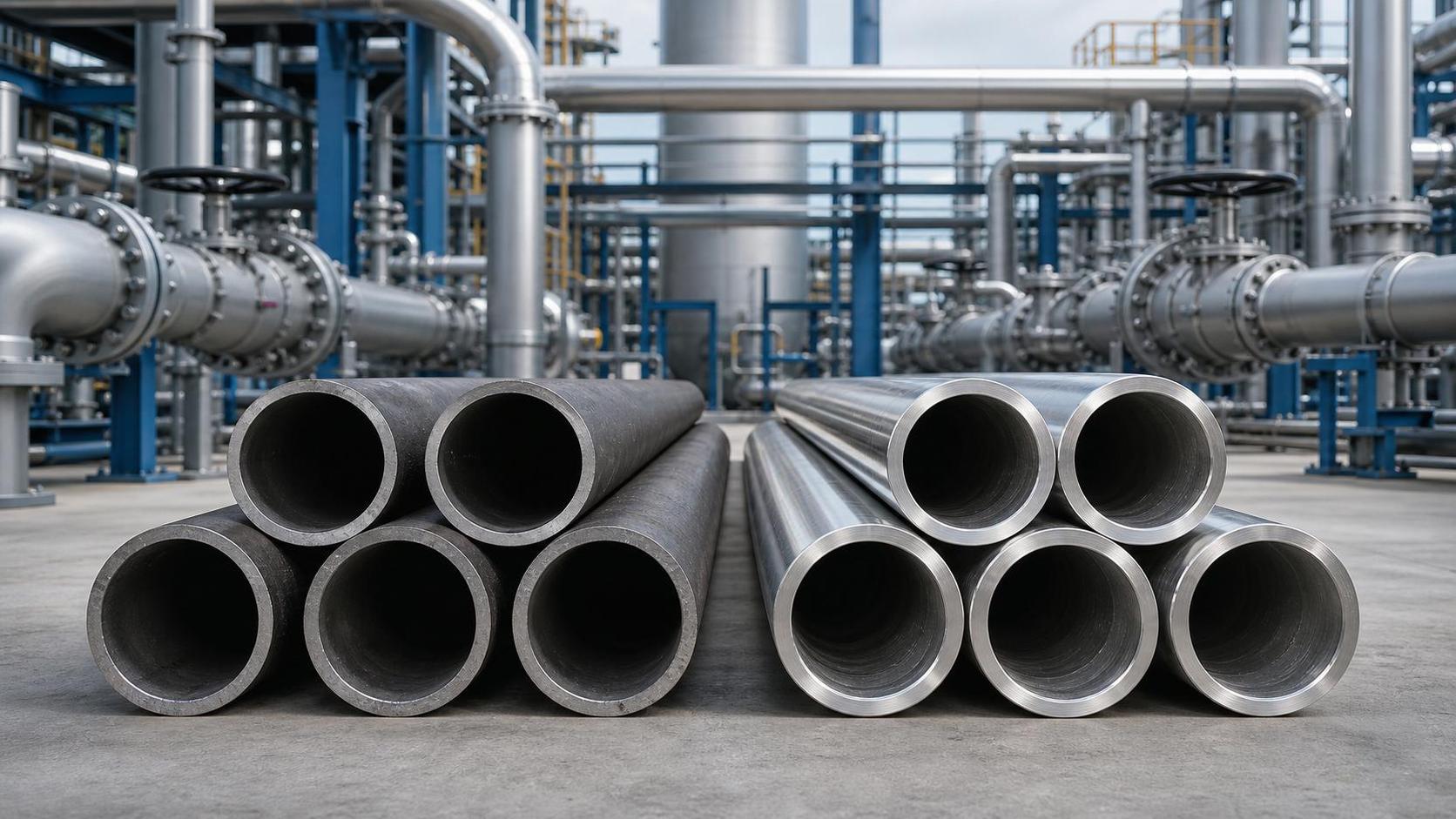
Carbon Steel Pipe vs Stainless: Which Fits Pressure and Budget?
Choosing between Carbon Steel Pipe and stainless steel is rarely a simple price comparison.
The right choice affects pressure safety, maintenance cycles, and total project cost.
In construction, petrochemical, power, and manufacturing projects, pipe selection also shapes delivery risk and compliance confidence.
From a sourcing perspective, both materials have clear strengths, but they solve different problems.
This guide compares Carbon Steel Pipe and stainless steel in practical terms, so decisions become faster and more reliable.
What Really Changes the Decision
At first glance, stainless steel looks safer because corrosion resistance is built in.
However, Carbon Steel Pipe often wins when pressure load, mechanical strength, and budget control matter most.
That is why many industrial systems still rely heavily on carbon steel for core transmission lines.
The smarter question is not which material is better overall.
The smarter question is which one fits the operating environment, pressure class, and lifecycle budget.
Key factors to check first
- Working pressure and temperature range
- Corrosion exposure inside and outside the pipe
- Required standards such as ASTM, GB, JIS, or DIN
- Fabrication needs, including welding, bending, and threading
- Surface treatment, coating, or galvanizing options
- Expected maintenance frequency and replacement cost
When these factors are reviewed early, material selection becomes much less subjective.
Pressure Performance: Where Carbon Steel Pipe Usually Leads
For high-pressure service, Carbon Steel Pipe is often the default option for a reason.
It offers strong tensile performance, good toughness, and reliable structural stability under demanding loads.
In steam lines, oil and gas transport, fire protection systems, and heavy machinery, those properties matter every day.
Seamless Carbon Steel Pipe is especially favored for higher pressure and critical service conditions.
Welded options can also perform well when standards and wall thickness match the application.
Why pressure systems often use carbon steel
- Higher strength-to-cost value in many industrial grades
- Broad availability in thick walls and large diameters
- Mature supply chain for ASTM and GB pressure pipe specifications
- Good compatibility with heat treatment and inspection methods
Stainless steel can also handle pressure, especially in quality austenitic or duplex grades.
Still, when pressure is the main driver and corrosion is manageable, Carbon Steel Pipe usually delivers better value.
Corrosion Resistance: Where Stainless Steel Has the Clear Edge
This is the area where stainless steel stands out most clearly.
If the fluid is corrosive, humid, saline, acidic, or chemically aggressive, stainless steel reduces long-term risk.
That advantage becomes more visible in coastal projects, food processing, water treatment, and chemical systems.
By contrast, Carbon Steel Pipe needs protection in corrosive service.
That may include painting, galvanizing, lining, wrapping, or regular maintenance inspection.
Even so, carbon steel should not be ruled out too quickly.
In many real projects, external coatings and internal treatment make Carbon Steel Pipe commercially practical.
This is especially true when stainless steel would push the budget beyond acceptable limits.
A simple rule of thumb
- Choose stainless steel for constant corrosion exposure and hygiene-sensitive systems.
- Choose Carbon Steel Pipe for pressure-driven systems with manageable corrosion conditions.
- Use coatings or galvanizing when carbon steel needs extra environmental protection.
Budget Comparison: Initial Cost vs Lifecycle Cost
Budget decisions often start with unit price, but they should not end there.
Carbon Steel Pipe usually has a clear advantage in upfront purchase cost.
That makes it attractive for large-volume orders, infrastructure works, and price-sensitive industrial expansions.
Large diameters and thick-wall specifications can create an even bigger price gap versus stainless steel.
But lifecycle cost tells a fuller story.
If corrosion drives shutdowns, leaks, or frequent replacement, the lower initial cost may lose its advantage.
On the other hand, paying for stainless steel in a mild environment may simply over-spec the project.
Application Scenarios: Which Material Fits Which Job?
Material selection becomes easier when tied to the actual operating scenario.
In practical business, the environment often matters more than the catalog description.
Choose Carbon Steel Pipe when
- The system carries high pressure steam, gas, oil, or compressed media
- Project volume is large and cost discipline is important
- Protective coating or galvanizing is acceptable
- The project requires strong structural support and broad dimensional availability
Choose stainless steel when
- Media purity, sanitation, or corrosion resistance is critical
- The environment includes moisture, salt, chemicals, or frequent cleaning
- Long service life with lower maintenance is worth the higher purchase price
- Appearance and surface finish also matter in the end-use system
For many industrial plants, a mixed-material strategy works best.
Carbon Steel Pipe can be used in main pressure lines, while stainless serves critical corrosive sections.
Standards, Testing, and Supply Reliability
Price and material grade are only part of the selection process.
A dependable supplier should also support verification, traceability, and standard-based production.
This matters even more when Carbon Steel Pipe is used in pressure service or regulated sectors.
Tianjin Runjin Metal Materials Co., Ltd. serves projects with carbon steel, galvanized steel, and stainless steel products.
Its portfolio includes steel pipes, plates, coils, and profiles for construction, petrochemical, machinery, bridges, automotive, and power infrastructure.
Located in Tianjin, the company benefits from strong regional manufacturing coordination and efficient port logistics.
Production and quality control capabilities are also worth noting.
The company operates cold-drawing machines, roller-hearth heat treatment furnaces, piercing mills, and hot-rolled steel pipe units.
Testing covers mechanical properties, eddy current and ultrasonic flaw detection, hydrostatic testing, metallographic analysis, and carbon-sulfur analysis.
Products can be manufactured according to GB, ASTM, JIS, and DIN requirements.
For a sourcing decision, that combination reduces uncertainty in both quality and delivery coordination.
A Practical Selection Checklist
If the decision still feels close, use a short checklist instead of relying on habit.
- Confirm pressure, temperature, and design code requirements.
- Review fluid chemistry and external environmental exposure.
- Compare total installed cost, not just pipe price.
- Estimate maintenance frequency across the service life.
- Verify testing methods, dimensional tolerances, and traceability documents.
- Check supplier capacity for the needed standards and lead time.
This process makes Carbon Steel Pipe selection more defensible and helps avoid unnecessary stainless upgrades.
Final Takeaway
If pressure performance and budget efficiency lead the decision, Carbon Steel Pipe is often the better fit.
If corrosion resistance and lower maintenance risk dominate, stainless steel usually justifies its premium.
The best result comes from matching the material to the operating reality, not to assumptions.
When specifications, testing, and supply capability are aligned, sourcing becomes smoother and technical risk drops.
For upcoming projects, compare both options line by line, then request a standards-based quotation that reflects actual service conditions.
- Last One:No more articles
- Next Article:How to Choose Stainless Steel Plate for Corrosion-Critical UseJun 25, 2026
Message
Leave A Message
If you are interested in our products and want to know more details, please leave a message here, we will reply you as soon as we can.